





Saving water is just as important as saving energy. Whether you are concerned about your spending or just want to help the environment, reducing water consumption will go a long way to do both. Fortunately, you do not have to ration drinking water or use dry shampoo every week to save water.
The right plumbing upgrades will reduce your water consumption without affecting your routines.
Low flow toilets
Older toilets consume up to six gallons of water per flush, while newer, low-flow toilets can use less than 1.3 gallons per flush. If you live in an older home with a toilet that was installed in the 1980s or earlier, replacing it with a low-flow toilet could do wonders to reduce water consumption. You can choose between gravity flush or pressure-assisted depending on your needs and location.
Low flow faucets and showerheads
Replacing your shower head, sink faucets, and kitchen faucets with low-flow types can reduce your water consumption without sacrificing function. It is not the same as having low-pressure water trickling out of your shower or faucet. Low-flow faucets use aerators to maintain pressure while consuming less water.

Dual flush toilets
There is no reason why you need to use a full tank of water to flush liquid waste. A dual flush toilet gives you the option of using different amounts of water for urine & solid waste. For a larger family, this translates into quick savings!
Leak detection
An unseen leak can waste huge amounts of water before it is discovered, not to mention the damage it causes to your property and possessions. Installing a leak detection system, either in critical locations like your laundry room or for your entire house, will ensure that you never have to deal with a hidden leak wasting water (and money).
Recirculation pumps
A hot water recirculation pump ensures that the water in your hot water pipe remains at the right temperature. If your water heater is in the basement and your shower is on the second floor, you may have to let the water run for a while before it is warm enough to step into. That is clean water going down the drain, unused & wasted.
Prevent this from happening by having a recirculation pump installed so you can jump right into consuming less water.
If you need help reducing your water consumption with plumbing upgrades, give us a call or schedule service online and our plumbers can help!
Plumbing can seem so integrated into your home that the thought of replacing piping might be daunting. However, just like other components of your home that occasionally need repair, pipes can need to be replaced for several reasons.
Here are some ways to tell it might be time to call in a plumber to replace piping.
Age of your home
If your home has been in your family for decades and no piping has been changed, there is a chance that it is time for an upgrade. Your pipes might be corroded and about to fail, deposits might have built up, or the pipe material may not be safe.
Have a professional inspect your plumbing to gauge whether you need to replace any of it.
Replacing with different pipe materials
Your piping may be fully functional but could still need to be replaced. If your home was built using lead piping, you could be at risk for health issues. Polybutylene (Poly-B) piping is another material that can fail due to disintegration.
If you have concerns about the piping used in your home, contact a plumber. They will be able to assess the material and make a professional recommendation on what steps you should take to correct any issues.
Frequent leaks
If you are dealing with frequent leaks in different areas of your home, it might be due to failing piping. Consider replacing pipework throughout your home to prevent further issues. Rather than deal with the leaks individually, preventative maintenance and replacement will protect your property and valuables from a possible catastrophe.

Frequent backups
Frequent drain backups can indicate buildup in piping. If this buildup is related to corrosion or some other damage, you may need to replace sanitary piping. Tree roots can also cause backups. Depending on the situation, it might be time to reroute and replace the affected piping.
Replacing piping due to renovations
Not all pipe replacement is due to failure. If you have renovated and added a new bathroom (or two), you might need to upgrade your pipe sizing. Typically, this is a normal part of the process when you are adding on to your home. If you have recently purchased a home, however, the previous owners may have done the work without replacing relevant piping.
Shifted earth
There are many reasons why dirt shifts on a property. In some cases, this movement is harmless. Sometimes, however, it can damage piping. If you notice leaks in your yard or slow drainage throughout your home, damage due to shifting soil may be to blame.
If you are having trouble with your plumbing and suspect your piping system is to blame, give us a call or schedule service online. Our plumbers will inspect your system and can help determine if it is time to replace piping.
When the temperature starts dropping, your first concern might be making sure your furnace is ready to provide the heat you will need this winter. Now, before the weather gets too cold, is the perfect time to evaluate your furnace. Optimizing its performance will not only reduce energy waste this winter but also help keep your furnace running longer and save you money.
Here are five things to keep in mind when evaluating your furnace this fall.
Replace the filter
In addition to affecting air quality, a dirty filter forces your blower fan to work harder to push air through. This reduces the performance of your furnace resulting in higher energy consumption. Keep on top of filter replacement to save money and protect your family’s health.
Tune-up your furnace on time
Postponing a furnace inspection and tune-up is akin to avoiding the doctor for years, preventing you from discovering health issues until too late. Regular maintenance helps keep your furnace running smoothly when you need it most. The best time to schedule a tune-up is in the fall before you begin using your furnace on a daily basis.

Keep a clean furnace room
Your furnace needs a certain amount of clearance around it for proper performance. This goes for the furnace itself as well as the exhaust vent. Blocking the vent or preventing enough oxygen from getting into your furnace causes increased production of carbon monoxide, a deadly consequence that goes beyond simple optimization.
If you are not sure about the clearances needed, call in a professional right away.
Take advantage of smart controls
Your furnace runs on its own because of the controls. In the olden days, you would have to manually throttle heating equipment. Without well-functioning controls, you can end up overheating your house or freezing unnecessarily. Proper control will ensure that you get the right temperatures in your home using just the right amount of energy to do so. You can settle for the basics but upgrading to smart controls will optimize your furnace performance even more.
Upgraded furnace
There is only so much you can do with older equipment. If your furnace is near the end of its life, consider upgrading to a more efficient system. Not only will it make optimizing performance much easier, but you will also reap the benefits of lower energy consumption and increased comfort.
If you need help optimizing your furnace for the best performance, give us a call or schedule service online.
Most discussions about energy consumption and reduction center around HVAC systems and lighting. Water heating energy consumption tends to get neglected. You can address the energy consumed by your water heater, both by changing your habits and making modifications to your hot water plumbing system.
Here are some tips for reducing your home’s plumbing energy consumption.
Change habits
Saving energy does not need to be difficult. Take shorter, cooler showers to save on both water and energy costs. Wash clothes in cold water or combine loads of laundry when possible, to reduce the amount of energy used. When doing the dishes, avoid leaving the water running constantly. If you are using a dishwasher, do not run it when there are only a few dishes that need to be washed.
Downsize your water heater
Reducing the size of your tanked water heater is something to discuss with a professional who can verify whether your existing heater is larger than your family needs. If it is time to replace your water heater, consider downsizing to save on energy without sacrificing hot water for your family.
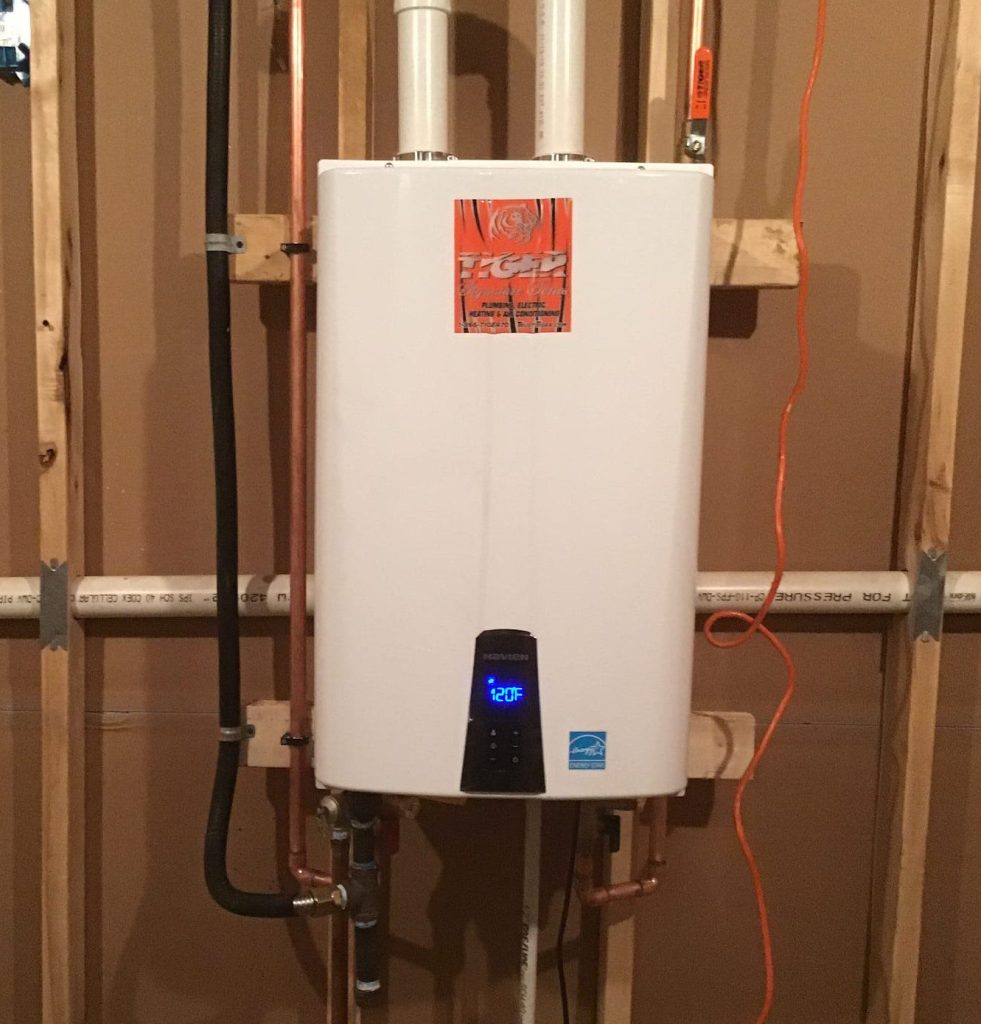
Install a tankless water heater
Depending on your routine, having a tank maintain the temperature of your hot water for an entire day while you are away might be a waste of energy. Consider installing a tankless water heater.
Review the temperature setpoint
Unfortunately, due to the risk of bacterial growth, there is a lower limit on the setpoint of your water heater. While it would be great to keep your water at 110 degrees Fahrenheit and save energy that way, you run the risk of getting sick. However, keeping the temperature any higher than 140 degrees Fahrenheit is not necessary for protection from bacterial growth and will only waste energy.
Look into energy-efficient options
A high-efficiency water heater will automatically save you energy to heat the same amount of water as a less efficient version. If it is near the end of your standard water heater’s life, consider investing in a higher efficiency model that will lower your energy consumption and save you money in the long run.
Add a recirculation system
Adding a recirculation system for your home’s hot water system will reduce both energy and water waste. Rather than having hot water sit in your pipework losing its heat, a small pump ensures that the pipe is always filled with hot water. It mixes with incoming cold water so it’s not wasted. It might seem counterintuitive to add an electrical pump but the power required to keep that water circulating is small. You will also reap the benefits of never having to wait for your shower to heat up!
Some of these tips you can carry out on your own but for the rest, give us a call or schedule service online and we can help you reduce your plumbing energy consumption.
If you’ve spent the summer sneezing and wheezing inside your home, it may be time to invest in an air purifier. These devices reduce dust, pollen, and other allergens inside the home.
The tricky part is figuring out what to buy. Air purifiers come in many different sizes and forms and use different technologies to clean your air. You can spend a few dollars to several hundred dollars for devices that may or may not solve your problem.
Here are some things to consider when deciding what type of air purifier is right for your home.
Furnace Filters
If your home has a furnace, you may already have an indoor air purifier in place; your furnace filter! Some are designed to filter out dust, mold, allergens, pet dander, and other pollutants from circulating around your home while others just help keep the furnace operating smoothly.
Be sure to change your furnace filter often. Typically, filters should be changed at least four times per year. If someone in your home suffers from allergies, it might be necessary to replace it more often.

Types of Air Purifiers
- Mechanical Filters - These filters remove particles from the air just like a furnace filter, but some may be more effective. These types of air purifiers are not reusable.
- Electronic Air Cleaners - This type of air cleaner uses an electrical field to trap particles. They are typically made of woven polyurethane and polypropylene fibers with aluminum grates and come in a variety of shapes and sizes to fit over HVAC system vents and returns. When air passes through the fibers it generates electrostatic charges that act as a magnet in attracting airborne particles. This type of filter can be cleaned and reused.
- Ionic Air Purifiers - These types of filters operate by releasing negatively charged ions into the air, which stick to positive charges inherent in pollutant particles. This causes the particles to stick to each other and settle out of the air onto objects in the room.
Location of the Air Purifier
Another big consideration is whether you want a whole-house air purifier or one or more portable units that can be set up wherever you wish in the home. We can install whole-house units onto your furnace. Portable units are noisier and less thorough in purifying the air throughout the home but they can sometimes be more convenient. A whole-house cleaner requires installation by one of our HVAC technicians but is much more effective in decontaminating the entire home.
Give us a call or schedule service online to discuss all of your options and our expert service professionals will help you select what best suits your needs and your budget.
FOR IMMEDIATE RELEASE
Tiger Plumbing, Heating, Air Conditioning & Electrical Services named as a Top Workplace in St. Louis and a Best Place to Work in Illinois
Metro East Home Services Company is one of the Best Places to Work in Illinois and the St. Louis Area
COLLINSVILLE, Ill. – AUGUST 2021 – Tiger Plumbing, Heating, Air Conditioning & Electrical Services has recently been named as a Top Workplace in the St. Louis area, one of the Best Places to Work in Illinois, and a Finalist in the St. Louis Business Journal's Best Places to Work.
Each award is designed to recognize the best places of employment in Illinois and the St. Louis Metro Area. Awards are based primarily on the results of employee feedback surveys.
The Top Workplaces in St. Louis survey is administered by Philadelphia-based employee research and consulting firm, Energage, in partnership with the St. Louis Post Dispatch. This year, over 50,426 local employees received surveys. Tiger Services is among the list of 151 Greater St. Louis employers to be named a Top Workplace for 2021. A full list of awardees was published in a special edition of the St. Louis Post Dispatch on June 18, 2021. This is Tiger Services’ fifth time receiving this award since 2016.
The Best Places to Work in Illinois survey is sponsored by the Daily Herald Business Ledger in partnership with the Illinois Chamber of Commerce, the Small Business Advocacy Council, and the Illinois Chamber of Commerce. The survey was administered and analyzed by Best Companies Group of Harrisburg, PA. This year, there were a total of 69 companies recognized as Best Places to Work in Illinois. Tiger Services ranked 20th in the Small Business category and 2nd in the Best Places to Work for Millennials category. This is Tiger Services’ sixth year in a row being recognized as one of the Best Places to Work in Illinois.
The St. Louis Business Journal’s Best Places to Work survey is administered by Quantum Workplace and measures communication, management structure, benefits, and other factors to rank St. Louis’ most employee-friendly workplaces. More than 250 nominations were submitted for the St. Louis Business Journal’s 2021 Best Places to Work Awards. Tiger Services is one of the 75 companies named as finalists.

About Tiger Plumbing, Heating, Air Conditioning, & Electrical Services
Tiger Plumbing, Heating, Air Conditioning, & Electrical Services is a leading provider of solutions and services that deliver comfort, indoor air & water quality, and electrical efficiency for residential customers. Tiger has been servicing Metro-East and Central Illinois residential homes since 1993. Tiger Services is a locally owned, veteran-operated business that takes pride in employing only the best service professionals. www.TrustTiger.com
Sometimes, the most common plumbing problems have simple solutions. It is important to recognize and correct smaller problems before they become larger, more expensive issues. Here are 6 practical tips from our expert plumbers that will help keep your home's plumbing in top shape.
Avoid chemical drain cleaners
Chemical drain cleaners are advertised as quick and easy solutions. This is not the case, and the use of these chemicals can result in expensive plumbing repairs in the future. Chemical drain cleaners can damage pipes and do not always completely clear clogs. If a plunger does not clear your clog, it is time to call a plumber with the correct tools to fix the job.
Know where your main water valve is located
If a pipe bursts in your home, would you know how to turn off the water? One of the most important plumbing tips is knowing where your main shutoff valve is located. Knowing this could save your property in the event of an unexpected plumbing disaster.
Use strainers to protect your drains
Using basket strainers in your sinks and shower will prevent hair, soap residue, and food waste from going down your drains and creating clogs. Regularly emptying a basket strainer is much easier and far less time-consuming than the unpleasant task of clearing a badly clogged drain.
Test your toilet's flush valve seal
The flush valve seal on your toilet keeps water from flowing from the tank to the bowl when it is sitting idle. Test the seal by adding a few drops of food coloring into your toilet's tank. If you check on the toilet after a few hours and the color has migrated to your toilet bowl, you have a leak that should be addressed.
Make sure your main sewer line clean-out is accessible
The clean-out pipe allows you to access your home's main sewer line to clear a blockage or for routine maintenance. Sometimes it is located outside near the house, but sometimes it can be found in your basement. Avoid placing objects over this access point. If you have a blockage in your sewer line, a plumber will need to access this spot to fix the issue quickly and efficiently.
Keep your showerhead clean
Have you noticed an erratic spray pattern or a weak flow in your shower? You might need a new showerhead, but first, try cleaning your existing one. Get a plastic bag and fill it halfway with vinegar. Then attach the bag to your showerhead using a rubber band. Leave your showerhead submerged in the vinegar overnight, and if the problem was due to buildup on your fixture, this should have fixed the issue! If this plumbing tip does not work, contact a plumber to determine the problem.
If these tips do not help fix your problem or if you have more extensive plumbing issues, our expert plumbers are here to help! Give us a call or schedule service online today.
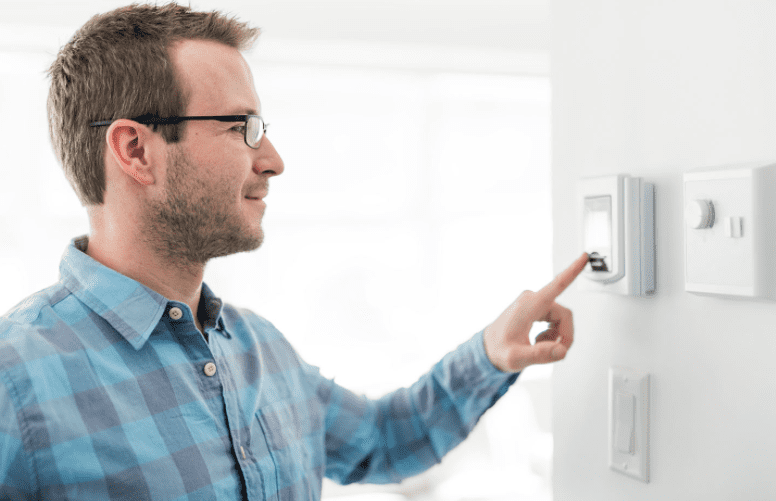
Without a doubt, thermostats are an important part of a home’s heating and cooling control. That is why you want to make sure your thermostat is doing its job. So how do you know when to replace it?
Here are four questions you need to answer when deciding if it is time to replace your thermostat.
Is your thermostat broken?
This may seem like an obvious question but you might be incorrectly blaming temperature troubles on your furnace or air conditioner. Turn the thermostat until you hear a “click” and wait for your HVAC system’s response. If you do not hear a “click” and the unit does not come on or go off, your thermostat might be faulty.
Can you repair it?
Once you figure out that your thermostat is not working right, the next step is to see if you can fix it yourself or if it needs to be replaced. It may simply need a new battery. There might also be loose wiring, dust build-up, or a tripped circuit breaker.
Before you attempt to repair your broken thermostat, make sure it does not require an expert. Always proceed with caution before opening it up and read the manual before doing anything.
Is it the correct thermostat for your HVAC equipment?
Many home furnaces are single-stage furnaces that cycle on or off as needed. Some, however, are two-stage, which means the first stage will come on and is then followed by the second stage if needed. Your thermostat must match this or it will not work properly.
Heat pumps, boilers, and furnaces all behave differently to variations in temperature settings. Your best option is to have a thermostat that is manufacturer-recommended. Call in a professional to assess this if you are not sure.
Are your energy bills too high?
If you have a manual thermostat that maintains only one temperature setting, then upgrading to a programmable thermostat can save you anywhere from 15% to 30% on your energy bills. It achieves this by allowing you to pre-set a lower temperature in winter or higher temperature in summer at any time the temperature setting is not as critical, like when everyone is away during the workday or on vacation).
You might also want to consider changing to a smart thermostat. This allows you to control the temperature via your phone so you can warm up or cool down your home before you get there on days outside of your normal pre-sets. Some thermostats even learn your habits and begin to adjust themselves accordingly!
If you decide it is time to replace your thermostat, or if you are having other HVAC issues, give us a call or schedule service online.
It is frustrating enough doing all the dishes that the family seems to leave in and all around the kitchen sink, but when you finish the dishes and drain the sink and it gurgles back at you, that is maddening!
Here are some quick fixes for a gurgling sink.
Could it be a clogged drain?
The kitchen sink drain probably gets used more than all the other drains in your home combined. Even without a garbage disposal, there is a lot of food that ends up being rinsed off of plates and going down the drain. Food debris and hardened grease can clog the drain over time. If the drain pipe gets to be partially obstructed, the water will still drain but air will get trapped at the obstruction and make that gurgling sound. If you notice water and bubbles when your dishwasher is draining, this is the likely cause.
Whatever you do, stay away from liquid drain cleaners. These products are harsh chemicals that can be extremely damaging to older drain pipes. It is best to call in a plumbing professional to attempt to clear your drain and get it dealt with before it becomes a bigger obstruction. At Tiger, we offer a $73 Drain Clearing Special. If we cannot clear the clog, your appointment is free!

How about a blocked vent pipe?
This is the classic cause of the gurgling sound you hear after the sink has drained, maybe even a few seconds after the water has drained. A vent pipe is attached to the drain pipe under your sink to allow sewer gas to escape. These vent pipes run to the roof of your house and vent outside, but they can become blocked by leaves, dirt or nesting material from birds. The vent pipe can sometimes be roughed in behind the cabinetry or in the wall so it can be hard to find. The best solution to this gurgling problem is to call a plumber who can quickly verify the problem and then clear the blocked vent pipe properly.
Was your sink just recently installed (or reinstalled)?
If a new sink drain is gurgling, it’s probably because the drain pipe has not been properly installed. Non-professionals sometimes do not understand the importance of the P-trap, routing of pipes, and the proper hook-up of a vent pipe. It is best to call in a plumber to correct this issue.
If your kitchen sink is gurgling, it is telling you there’s a problem with airflow in the drain pipe, there could be a clog or blockage or even an improper installation. Give us a call or schedule service online if you are having issues. Our experienced plumbers can listen to the gurgle and quickly determine how best to get rid of it.