





You’re probably familiar with the sound of your furnace kicking on and air blowing out of your home’s registers. But when you start to hear banging, whistling, rumbling or clattering every time your furnace turns on, it can be cause for concern. So let’s take a look at some possible answers to the question, “Why is my furnace loud?” and talk about how you can fix and prevent the problem!

Why is my furnace loud? 6 possible explanations
- Gas burners are dirty. If dirt builds up on your furnace’s burners, it can cause your furnace to operate with a loud rumbling sound.
- Filter door loose. Many furnaces have a door or panel that must be opened or removed in order to access the air filter. If that door is not tightly shut, or if it’s loose, it can rattle around when your furnace is operating.
- Air ducts leaking. Duct leaks are common in Metro East area homes. Often times, air inside your ducts will escape out of those leaks and create a whistling sound when your furnace is operating.
- Unlubricated parts. Unlubricated parts, such as bearings, can create a high-pitched squeal while your furnace is operating.
- Unadjusted pilot light (older units). Older furnaces use a pilot light as their burner ignition system. If that pilot light is not adjusted properly, your might hear a clattering sound coming from your furnace.
- Worn blower motor belt (older units). Another feature of older furnaces is blower motor belts. These belts can wear down over time, or slip off the motor, which is another problem that can force your furnace to operate with a high-pitched squeal.
What should you do if your furnace is operating loudly?
With the exception of closing and securing your filter door, the problems listed above are best handled by a professional HVAC contractor like Tiger. We can inspect your entire heating system and determine the exact cause of the noises its making. After determining the problem, we’ll talk with you about what we can do to fix the problem.
One of the best ways to keep your furnace running quietly and avoid an extra call to Tiger is to schedule an annual tune-up before every heating season. A tune-up will bring your furnace up to its peak performance and efficiency levels while also solving any of the problems above before they become bigger issues.
If you have any questions about why your furnace is so loud, or if you’d like a heating system serviced or installed in your home, contact Tiger, your Glen Carbon plumbing, heating and air conditioning contractor.
photo credit: hebedesign
It’s been a bitterly cold winter this season in the Metro East area. And even though the beginning of spring is just a few weeks away, we’re still forecasted for some single digit temperatures before we’re out of the woods. We want to help ensure that your home stays warm when you need your furnace the most, which is why today we’re providing you with five tips to keep your furnace running strong during extreme cold temperatures!
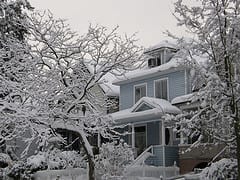
5 furnace tips for dealing with extreme cold weather
- Keep a clean air filter installed. Your furnace works as hard as it can during extreme cold weather, so it’s important to do everything you can to give it a helping hand. One of the best ways you can do that is to make sure that you have a clean filter installed. If your filter is dirty, your furnace will have to work harder to compensate for the loss of airflow. A dirty filter is an issue at any time of the year, but it’s especially problematic in extremely low temperatures when your furnace is already working its hardest.
- Don’t set back your thermostat. Just last week we posted a blog about how you can set your thermostat back during certain times of the day to conserve energy. Although this is a great idea, you should hold off on doing it when the temperatures are extremely low. That’s because your furnace might have a hard time bringing your home back up to your desired temperature, and it will consume a whole lot of energy while it’s trying to do so.
- Check high efficiency furnace vents outside. If you have a high efficiency furnace, you likely have intake and exhaust vents that lead outside (those PVC pipes that stick out of your home near the ground). Check to make sure that nothing is blocking those vents and that snow or ice has not built up inside them. This will help keep your furnace working properly and safely.
- Dress warm. Furnaces are powerful, but they can only handle a specific difference between indoor and outdoor temperatures. When it’s bitterly cold out, your home might be colder than usual. Be sure to dress warm and use blankets to stay comfortable until the weather warms up a bit.
- Call Tiger if you suspect any problems. When in doubt, give us a call! It’s best to take care of furnace problems as soon as you encounter them, because nothing would be worse than your furnace going out on one of the days that you need it the most.
If you have any questions about these furnace tips for extreme cold weather, or if you’d like a heating system serviced or installed in your home, contact Tiger, your Metro East plumbing, heating and air conditioning contractor.
photo credit: Wanderin' Weeta
The temperature setting that you choose for your thermostat will have a big impact on the amount of energy that your furnace consumes. The higher your thermostat is set at, the more energy your heating system will use and the higher your gas bills will be. Today we’re going to talk about how to find the best thermostat settings for your Metro East home!
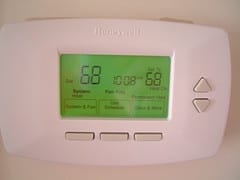
How to choose the best thermostat settings for winter
- Find your at-home temperature. The temperature that you choose for when you’re at home and awake is probably the most important because you can use that as a basis for your thermostat settings for the rest of the day and night. The Department of Energy suggests that you use 68 degrees for this setting because it will maximize your energy-savings. If this is a comfortable setting for you and your family, that’s great! If it’s too cold, raise your thermostat one degree at a time until you find the lowest setting that you’re comfortable with.
- Find your overnight temperature. Now that you’ve decided on an at-home temperature, try lowering your thermostat about five degrees (63 degrees) before you go to sleep at night in order to conserve energy. During winter, we use sheets, covers, blankets and warm clothes while we’re sleeping, so you should still be able to stay comfortable when your home is a little cooler overnight. If 63 degrees is too cold, try raising your thermostat one degree at a time the same way you did with your at-home temperature to find the lowest setting that you’re comfortable with.
- Lower your thermostat when you’re away from home. The easiest time to save energy with your thermostat is when your home is unoccupied because nobody is there to worry about comfort levels. Lower your thermostat about 5 degrees (63 degrees) before everyone in your home leaves for school and/or work in the morning in order to save energy while you’re gone.
Use a programmable thermostat to maximize your savings
When you have all of your temperature settings figured out for every time of the day, it can get annoying to have to manually change your thermostat over and over. That’s when a programmable thermostat can help.
With a programmable thermostat, you can store temperature settings for various times of the day and days of the week, and it will automatically adjust your home’s temperature levels accordingly. In addition, a programmable thermostat allows you to time your temperature settings so that your home will be nice and warm the moment you step out of bed in the morning or return home from a day’s work.
If you have any questions about choosing the right thermostat setting for winter, or if you’d like a heating system serviced or installed in your home, contact Tiger, your Glen Carbon plumbing, heating and cooling contractor.
photo credit: cthoyes
A dirty air filter is the number one cause of preventable furnace problems in Metro East area homes. Changing your filter is a simple task, yet it can have serious consequences when it’s left undone. Today we’re going to talk about the effects a dirty furnace filter has on your furnace and why it’s so important to regularly check and change the filter in your home!
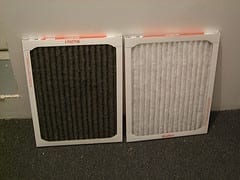
How does a furnace filter get dirty?
Your filter’s job is to trap particles from your home’s air before they reach your furnace. This not only helps improve your home’s air quality, but also protects your furnace from the damage that those particles could cause.
The longer you have a filter installed, the more particles it will trap. At some point (about a month for standard 1” throwaway filters), the filter will trap so many particles that it will get clogged and begin to affect your furnace’s efficiency and performance.
What effects does a dirty filter have on furnace efficiency?
When your filter is clogged with dirt, it makes it hard for your furnace’s fan to blow air past the filter. As a result, your furnace’s blower will have to work harder and consume more energy than usual. A furnace that operates with a dirty filter will result in energy bills that are significantly higher than usual.
What effects does a dirty filter have on furnace performance?
In addition to decreasing efficiency levels, a dirty filter can cause performance problems with your furnace. For one, the extra work that a clogged filter forces your furnace to perform will result in added wear-and-tear that can shorten the operating life of your system, especially if you rarely change your filter.
In addition, dirt will bypass a clogged filter and build up on your furnace’s components. Dirt buildup can be extremely problematic for your furnace and lead to all kinds of efficiency, safety and performance issues.
How often should you change your air filter?
In order to avoid the many problems associated with a dirty air filter, it’s best to check your filter once every month. This is true even if your filter is designed to last longer than a month, because it’s always good to have a sense of what condition your filter is in. Be sure to change your filter as soon as you notice that it’s clogged up in order to keep your furnace running smoothly.
If you have any questions about the effects of a dirty furnace filter, or if you’d like a heating system serviced or installed in your home, contact Tiger Services, your Glen Carbon plumbing, heating and air conditioning contractor.
photo credit: Steven Vance
Many homeowners in the Glen Carbon and St. Louis Metro East areas use 1” fiberglass throwaway filters with their furnace or air conditioner. These filters are common because they are inexpensive, but they don’t do a very good job at protecting your HVAC system or your health from the contaminants in your home’s air. If you’d like a better filter for your home, but you’re not ready to install an indoor air cleaner, a pleated air filter might be just what you’re looking for.

What is a pleated air filter?
A “pleat” is the accordion-style fold that you can find on certain types of clothing such as the bottom of a dress. A pleated filter is a type of filter that uses this type of folding pattern in order to increase the filter’s surface area without having a big impact on your system’s airflow.
Pleated filters come in a number of different sizes and MERV ratings, and they can be installed in the same slot that throw away filters are housed.
What are the advantages of a pleated air filter?
- More efficient than throw away filters. Whereas a standard throwaway filter provides a bare-minimum of protection for your HVAC system, pleated filters are much more effective. A MERV 12 pleated filter, for example, can remove more than 90 percent of particles between 3 and 10 microns in size and more than 80 percent of particles between 1 and 3 microns in size. Particles of these sizes do the most damage to your HVAC system, so pleated filters can provide great protection. In addition, pleated filters can remove some of the large allergens in your air like pollen and dust mites, so they can also help improve your family’s allergy symptoms.
- Last longer than throw away filters. A standard throw away filter typically doesn’t last longer than 30 days. Depending on the type of pleated filter you install, it can last upwards of 60-90 days because of the increased surface area that comes with its pleated design.
- Little effect on airflow. Another advantage of the design of pleated filters is that it allows for increased surface area without affecting airflow. This is not the case with flat-panel throwaway filters, which can severely decrease your system’s efficiency as they go up in MERV rating.
- Inexpensive and easy to install. Although indoor air cleaners are much better at improving your home’s air quality and protecting your family’s health, pleated filters are more inexpensive and don’t require a professional installation. This makes a pleated air filter a great choice for homeowners who want to have great protection for their HVAC systems but aren’t yet ready to invest in an indoor air cleaner.
If you have any questions about a pleated air filter, or if you’d like a heating and cooling system serviced or installed in your home, contact Tiger Services, your Glen Carbon, IL, plumbing, heating and air conditioning contractor.
photo credit: elcamino73
Be sure to check us out on Facebook, Twitter, Pinterest, and Instagram
A garbage disposal is one of the most convenient appliances you can have in your kitchen. However, disposals can get jammed if objects are sent down your drain that your disposal isn’t built to handle or if too many items were dropped into your disposal at once. So what are you supposed to do if your garbage disposal is clogged? Check out the four suggestions we listed below!

Important safety precautions when fixing a clogged garbage disposal
Before you even think about fixing a clogged garbage disposal, there are two important things you should remember. First, always shut your unit’s power off before doing any work on it. If your disposal were to accidentally turn on while you are attempting to fix it, your safety could be at risk and you could possibly damage the unit.
Second, never stick your hand down a garbage disposal. Even if you think your disposal is turned off, there is a chance that it could turn back on and cause a serious injury.
4 things to try when your garbage disposal is clogged
- Remove obvious clogs with pliers. Some garbage disposal clogs can be easily found by simply looking down your drain with a flashlight. If you see any large objects that could be jamming your disposal (such as a fork or a large food item), remove them with a set of pliers.
- Break up clog with a stick. For more difficult clogs, you can try to break it up with a long stick such as a broom handle. Push the stick to the bottom of the disposal until you can feel the blades. Next, move the blades back and forth with the stick until the clog feels like it has freed up.
- Manually spin blades with an Allen wrench. Most garbage disposals have a slot at the bottom-center of them that fits an Allen wrench or a hex key. Insert the proper tool into the slot and move it back and forth. This will manually spin the blades and help break up the clog. When it feels like the blades are moving freely, the clog should be fixed.
- Give Tiger a call. If you can’t seem to fix your clogged garbage disposal or you’re not comfortable attempting to fix it on your own, don’t hesitate to give Tiger a call. We’ll unjam your disposal and get it back up and running in no time!
If you have any questions about what to do if your garbage disposal is clogged, or if you’d like a plumbing system serviced or installed in your home, contact Tiger Services, your Glen Carbon plumbing, heating and air conditioning company.
photo credit: thegardenbuzz
During summer here in the St. Louis Metro East area, homeowners often have two conflicting desires: they want their homes to be as comfortable as possible but they also want to keep their energy bills under control. One of the main factors to influence both of these things is your home’s thermostat settings. Today we’re going to provide you with recommended thermostat settings for summer to help you figure out the best temperature levels for your home!

What’s the most comfortable summer thermostat setting?
As we’re sure any family can attest, the most comfortable home temperature is up to personal preference. Some people love the bitter cold during a hot summer day while others enjoy a milder indoor environment. In general, however, people say they feel most comfortable at about 72 degrees. But is this the best thermostat setting for energy savings?
What are the best thermostat settings for energy savings?
The EPA offers energy-saving recommendations for thermostat settings that exceed the 72 degrees we mentioned above. For maximum energy savings, they recommend setting your at-home temperature at 78 degrees. In addition, the EPA suggests that you raise your thermostat about 10 degrees when you’re away from home.
What are our recommended thermostat settings?
Here at Tiger, we want you to conserve energy but we also want to ensure that your air conditioner is keeping your home comfortable. To find a happy medium, we suggest setting your thermostat at 78 degrees and seeing how you feel. Is that too warm? Then try lowering your thermostat one degree at a time until you find a comfortable level that everyone in your family can agree with.
No matter what temperature you settle on, we encourage you to raise your thermostat when you’re away from home (as we mentioned above). This will help cut energy costs during the times of day that cool air is not required in your home. The easiest way to do this is to install a programmable thermostat!
If you have any questions about these recommended thermostat settings for summer, or if you’d like a cooling system serviced or installed in your home, contact Tiger, your Glen Carbon plumbing, heating and air conditioning company.
photo credit: _vikram
If you’re like most homeowners in the St. Louis Metro East area, you use hot water in the kitchen on a daily basis. In fact, you probably spend much of your time in the kitchen waiting for a pot of hot water to heat up on the stove. Wouldn’t it be great to eliminate the waiting and have hot water ready for use right when you need it? An instant hot water dispenser makes this possible!
What is an instant hot water dispenser?
An instant hot water dispenser is a plumbing appliance that’s installed under your sink or in your cabinet. Depending on the model, the dispenser heats water either on-demand or using a small storage tank. A separate faucet is installed on your sink and connected to the dispenser in order to deliver the hot water. Any time you want hot water in your kitchen, you simply have to turn on the tap and it’s ready for you!
What are the benefits of installing an instant hot water dispenser?
- Extremely convenient. Instead of taking out a pot, turning on your stove and waiting for water to boil, an instant hot water dispenser has hot water ready for you the moment you need it at the flick of a switch.
- Energy- and water- efficient. Instant hot water dispensers consume a minimal amount of energy and allow you to cut back on your home’s water consumption because you won’t waste as much water while waiting for a tap to get hot.
- Hotter water than normal tap. Water heaters are typically set at 120 degrees, which is perfectly suitable for most needs in your home. In the kitchen, however, we often need water that’s hotter than that. Most instant hot water dispensers deliver water close to 200 degrees (near the boiling point).
- Many uses. Along with being great for hot beverages like coffee and tea, instant hot water dispensers can be used for making hot cereal, thawing foods, loosening jar lids, cleaning pots and pans and much more!
If you have any questions about an instant hot water dispenser, or if you’d like a plumbing system serviced or installed in your home, contact Tiger, your Glen Carbon, IL, plumbing, heating and air conditioning company.
photo credit: da5ide
Think about the last time you turned on a faucet and waited for hot water. Most likely, a stream of unused water was sent down the drain while you waited for it to heat up. In the average home, somewhere between 10,000 and 20,000 gallons of water is wasted per year on waiting for hot water! Luckily, a hot water circulation system provides the perfect solution to this problem.
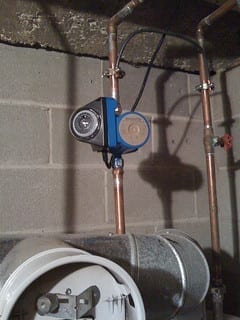
What is a hot water recirculation system?
A hot water recirculation system is a plumbing enhancement that gives you instant hot water at every tap in your home. The system uses a pump that’s mounted near the bottom of your water heater that continuously cycles hot water between your water heater and the farthest tap in your home.
What are the benefits of installing a hot water recirculation system?
- Instant hot water. With a hot water recirculation system, you don’t have to wait for hot water to travel from your water heater to your tap. That means whether you’re washing your hands or taking a hot shower, your hot water will be ready for use as soon as you need it.
- Conserves water. Because it provides instant hot water, a hot water recirculation system significantly cuts down on the amount of water that you’d otherwise waste while waiting for a tap to heat up. This is a great benefit because it helps the environment and lowers your utility bills!
Is a hot water recirculation system energy-efficient?
Since a hot water recirculation system is continuously operating, you might be wondering if it consumes a lot of energy. In recent years, energy-efficient pumps have been introduced that are able to operate while consuming a minimal amount of energy.
In addition, many newer models have features like a timer or thermostat that tells the system to turn off when there is less of a demand for hot water or when it detects that your plumbing system has an adequate supply of hot water. The small amount of energy that these energy-efficient hot water recirculation systems use is offset by the amount of water-savings and convenience they provide.
If you have any questions about a hot water recirculation system, or if you’d like a plumbing system serviced or installed in your home, contact Tiger, your Glen Carbon plumbing, heating and air conditioning company.
Photo Credit: Chris Tengi